Start with access, indexation and conversion paths before cosmetic warnings. Confirm that important URLs return the intended status, are crawlable, render useful HTML, declare consistent canonical signals and can be reached through internal links. Then assess mobile behavior, LCP, INP, CLS, structured data and international signals. Prioritize by impact, confidence and effort.
1. Define the scope and baseline
- List commercial pages, important templates and languages.
- Record current indexed pages, organic queries and enquiries when data exists.
- Collect URLs from navigation, XML sitemaps and Search Console.
- Agree what success means and who can implement each class of fix.
2. Check crawling, indexation and consolidation
- Important URLs return 200; removed URLs return 404/410 or a relevant redirect.
- robots.txt does not block required resources or pages.
- XML sitemaps list only canonical, indexable URLs.
- Canonical tags, redirects, internal links and hreflang agree.
- HTTP/HTTPS, www/non-www and index-file variants consolidate in one hop where practical.
- Noindex is intentional and does not conflict with the sitemap.
Use Google’s documentation for robots controls and the SEO Starter Guide as primary references.
3. Check architecture and internal links
- Every important page receives contextual internal links.
- No important page is orphaned or buried unnecessarily deep.
- Anchor text describes the destination without repetitive stuffing.
- Filters, parameters and pagination do not create uncontrolled crawl paths.
- Language alternates link reciprocally where true equivalents exist.
4. Check rendering, mobile and performance
- Important copy and links exist in rendered HTML.
- Forms and deep links work on direct load, refresh and back/forward navigation.
- Mobile pages have no horizontal overflow and important controls are easy to tap.
- Measure field LCP, INP and CLS when eligible; use lab tests to diagnose mechanics.
- Images have dimensions, useful alternatives and efficient formats.
- Structured data matches visible facts and passes validation.
The current Core Web Vitals are documented by web.dev. Do not substitute lab responsiveness proxies for field INP without explaining the limitation.
5. Decide what to fix first
| Impact | Confidence | Effort | Typical decision |
|---|---|---|---|
| High | High | Low | Schedule immediately |
| High | Medium | High | Validate, then plan |
| Low | High | Low | Batch with maintenance |
| Unknown | Low | Any | Gather evidence first |
Download the audit report template to assign owners, dates and acceptance criteria, or review the technical audit service.
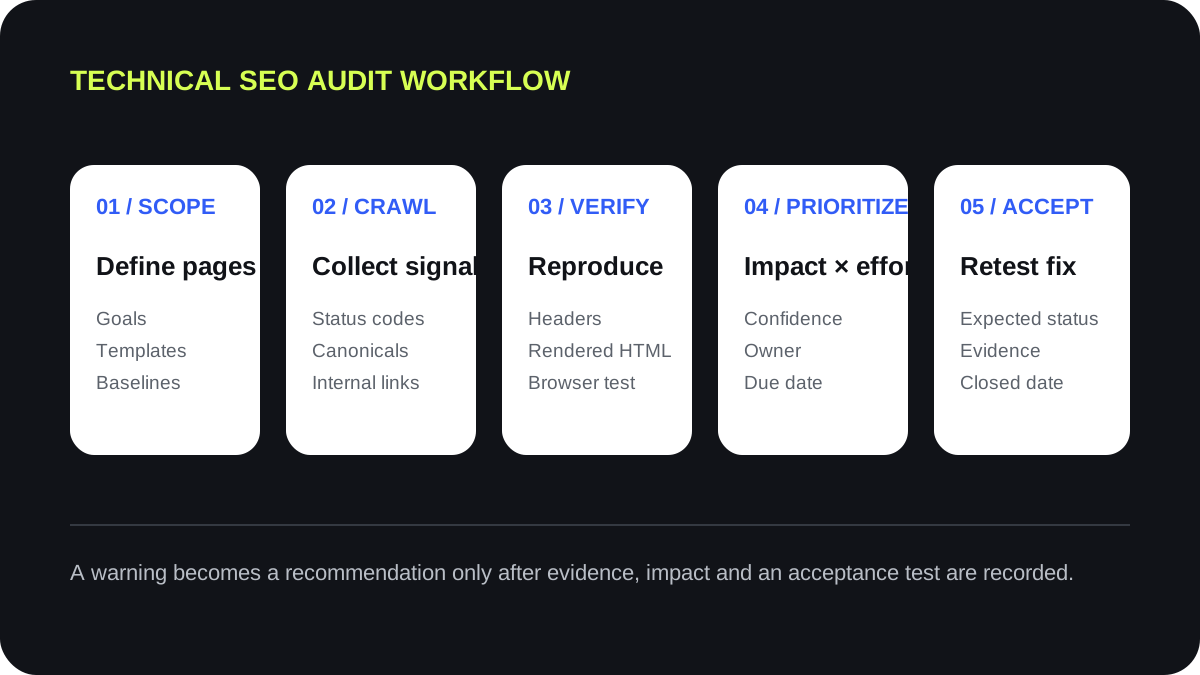
6. Validate HTTP and indexation behavior
- Status: priority URLs return 200 without intermittent 5xx responses. Record timestamp and request ID; the owner is hosting or engineering; acceptance is three repeat crawls without failure.
- Redirects: every retired or alternate URL reaches its canonical destination in one hop where hosting permits. Record the complete chain; acceptance is no loop or self-redirect.
- 404 behavior: a controlled missing URL returns a genuine 404 and useful navigation. Record headers and rendered page.
- Canonical selection: HTML canonical, sitemap URL, internal links and redirect destination agree. Validate in source and Search Console when available.
- Index directives: robots meta, X-Robots-Tag and sitemap membership do not conflict. Acceptance is one intentional index decision per URL.
7. Test rendering and JavaScript resilience
- Critical copy, links and structured data exist in initial HTML; record source excerpts.
- Useful content remains visible with JavaScript disabled; capture a mobile screenshot.
- Direct fragment links land correctly on initial load, refresh and history navigation.
- Lazy-loaded assets retain explicit dimensions and useful alternatives.
- Console errors do not prevent navigation, forms or conversion actions.
8. Check accessibility, security and transport
- Keyboard focus is visible and follows a logical order.
- Important controls provide approximately 44×44 px touch areas without overlap.
- HTTPS is enforced and mixed content is absent.
- Security headers are present and do not block required first-party resources.
- HSTS is extended only after every required subdomain is confirmed HTTPS-ready.
9. Record measurement and monitoring
- Search Console ownership and sitemap status are recorded.
- Priority URLs are inspected for Google-selected canonical and index state.
- Field LCP, INP and CLS are used when available; lab results are labelled as diagnostics.
- Organic enquiries are tracked separately from general page views.
- Titles, canonicals, robots, schema and response codes have a post-release baseline.
Evidence sheet for every check
| Field | What to record | Acceptance |
|---|---|---|
| Observation | URL, timestamp, response or screenshot | Another person can reproduce it |
| Impact | Affected page, user or search process | Business consequence is explicit |
| Owner | Content, developer, hosting or owner | One accountable role |
| Validation | Exact retest after the change | Pass/fail result is unambiguous |
Internal homepage links pointed to a redirect
Observation: English navigation linked to /index.html, which permanently redirected to /. Action: update every internal target to the canonical root. Owner: developer. Acceptance: the next crawl finds zero internal links to redirected homepage variants. The October 6 rerun confirmed this test passed.
Need a prioritized action plan?
Get a human-led audit and a practical 90-day plan in five business days.
Order the €299 SEO Audit